For many transgender and non-binary individuals, having unwanted facial hair is one of the most persistent sources of distress during transition. It may be highly visible, difficult to conceal, and resistant to the hormonal treatment that reshapes many other aspects of the body. Addressing unwanted hair growth thoroughly and permanently can be a central part of gender-affirming care rather than a cosmetic afterthought.
That is precisely why electrolysis permanent hair removal has become a standard recommendation within gender-affirming health settings. For those exploring options for transgender hair removal in Melbourne, understanding where electrolysis fits within the broader care picture makes it considerably easier to choose the best method for their needs.
Why Facial Hair Persists Despite Hormone Therapy
Oestrogen therapy brings about meaningful changes for many transgender women, including softer skin, shifted fat distribution, and reduced body hair growth over time. However, it does not reliably eliminate existing facial hair. Typically, the follicles that produce coarse facial hair are not sufficiently sensitive to hormonal shifts to simply stop functioning. This means that even clients who have been on hormone therapy for years will often still require dedicated hair removal treatment to achieve a clear, smooth result.
This is well documented in the gender-affirming care literature. The University of California, San Francisco’s Gender Affirming Health Program notes that while temporary measures exist, many people seek electrolysis permanent hair removal.
What Makes Electrolysis the Optimal Choice
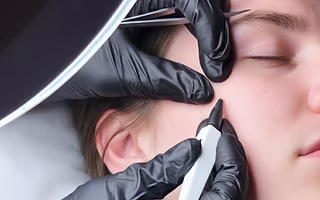
Electrolysis works by inserting a hair-thin probe into the base of the hair follicle, where a tiny electrical current triggers a chemical reaction that destroys the stem cells which produce new hair. This permanently stops hair growth in the treated follicle. Unlike laser hair removal, electrolysis does not rely on pigment, which means it is equally effective across all skin tones and all hair colours, including grey, fine, or light hairs that lasers cannot reliably target.
For transgender individuals, this matters considerably. Facial hair varies widely in colour, texture, and density, while electrolysis works regardless of these variables and provides a level of consistency that other approaches cannot match. The benefits of electrolysis permanent hair removal include the following:
- Effective on all hair colours, including light and unpigmented hairs
- Suitable for all skin tones without adjustments to the protocol
- Results are permanent once the follicle has been fully treated
Why Multiple Electrolysis Sessions Are Required
Electrolysis achieves permanent results, but it usually requires a series of appointments rather than a single session. This is because hair grows at different times within its natural growth cycles. Since not all hairs are present or visible at any one time, a series of treatments ensures all follicles are addressed as they progress through their individual cycles.
For facial clearance, particularly on areas such as the upper lip, chin, and jawline where density tends to be highest, the overall timeline varies from person to person. Consistency with the treatment schedule matters more than speed.
- Electrolysis sessions are spaced to allow skin recovery between appointments
- Areas with denser growth typically require more visits to achieve full clearance
- Clients who attend treatment sessions regularly tend to reach their goals more efficiently
Electrolysis as Part of a Coordinated Approach
For those preparing for gender-affirming surgery, electrolysis is often recommended for surgical site preparation. The treatment typically should be planned well in advance, and the electrologist should be made aware of surgical timelines so that sessions can be scheduled accordingly.
What to Expect from Electrolysis Treatment
Mild discomfort or a tingling sensation can sometimes be felt as part of electrolysis. Some clients report brief stinging at each insertion point. Minor redness or swelling in the treated area can occur after a session, but typically resolves within a few hours. Following your electrologist’s aftercare guidance supports both comfort and optimal results.
It is recommended to find a reliable electrologist who will create an individualised treatment plan, taking into account one’s skin sensitivity, the treatment area, and personal goals. Discretion, consistency, and a thorough understanding of each client’s broader care journey are all part of providing electrolysis permanent hair removal treatment that genuinely serves the person receiving it.
Permanent facial hair removal is not a luxury add-on for those undergoing gender-affirming care. For many people, it is one of the most significant steps they take, and electrolysis, approached properly, delivers life-long results.
